
Abalone Shells – Natural Beauty & Cultural Significance
Abalone shells are treasured worldwide for their iridescent color, organic strength, and deep cultural meaning. At WanderingBull.com, we proudly offer abalone shells and related supplies to artists, craftspeople, and cultural practitioners across New England and the Northeast.
What Is Abalone?
Abalone are large sea mollusks that thrive in colder waters around the globe. Their diet—primarily kelp and other seaweeds—creates the brilliant colors inside the shell. Each layer of the shell contains calcium carbonate, forming a naturally strong, protective structure.
The exterior of the shell often hosts barnacles, algae, and other sea life. The row of holes along the edge serves as respiratory openings, allowing water to vent from the gills. As the abalone grows, the shell expands in a spiral pattern and older holes gradually close.
Because abalones can repair minor shell damage, many communities view them as symbols of strength, resilience, and healing.
History of Abalone Shells
Some archaeological sites from around the world have included abalone shells dating back over 100,000 years. For many coastal communities, abalone provided both a vital food source and a valuable material for:
- Decorative items
- Fishing hooks
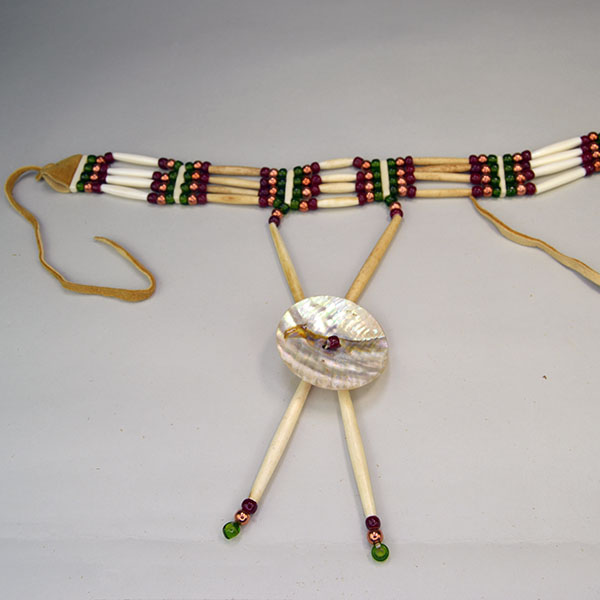
- Jewelry and adornment
- Trade and currency
Harvesting abalone traditionally required divers to enter cold, dangerous waters and pry the mollusks from rocks—an act considered a rite of passage in some cultures. Commercial abalone farming began in the mid‑20th century, making shells more widely available for artisans and ceremonial use.
How Abalone Shells Are Used Today
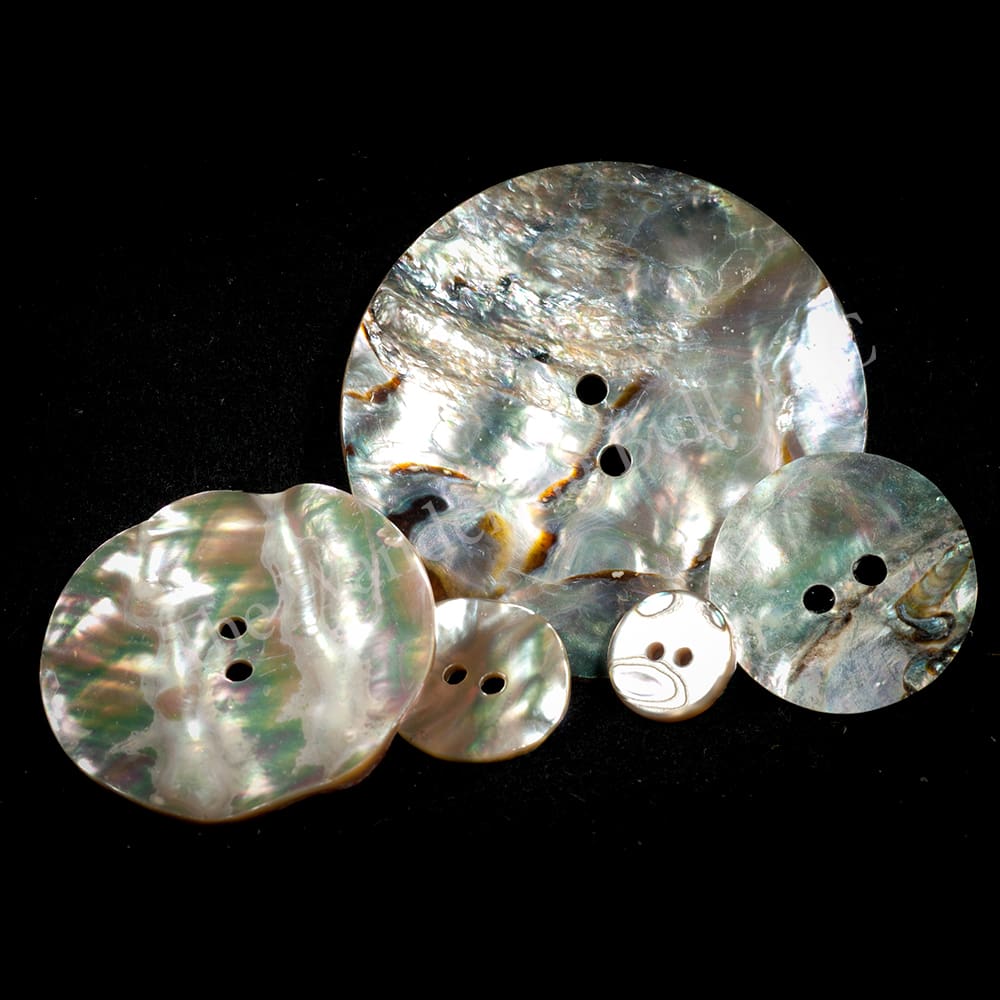
The inner surface of an abalone shell displays vivid pink, purple, green, and blue hues, earning it recognition as an organic gem. People also refer to Abalone as Mother‑of‑Pearl, Paua, Haliotis Iris, Nacre, Aulon, or Sea Ear.
Common uses include::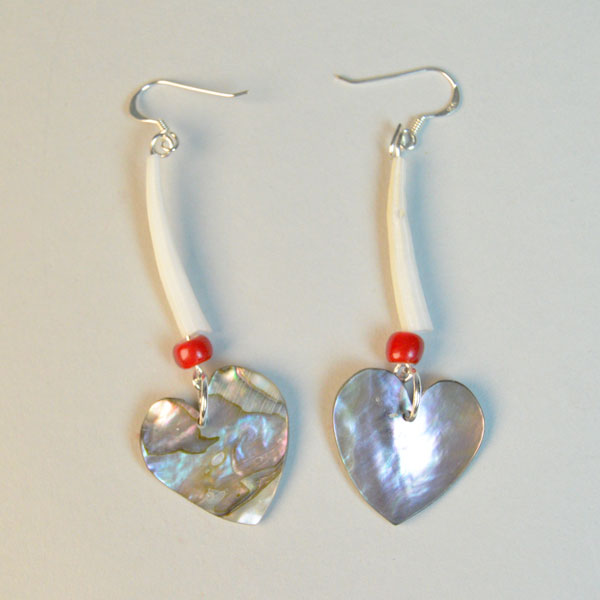
- Jewelry making
- Buttons and fasteners
- Inlay for artwork, furniture, and musical instruments
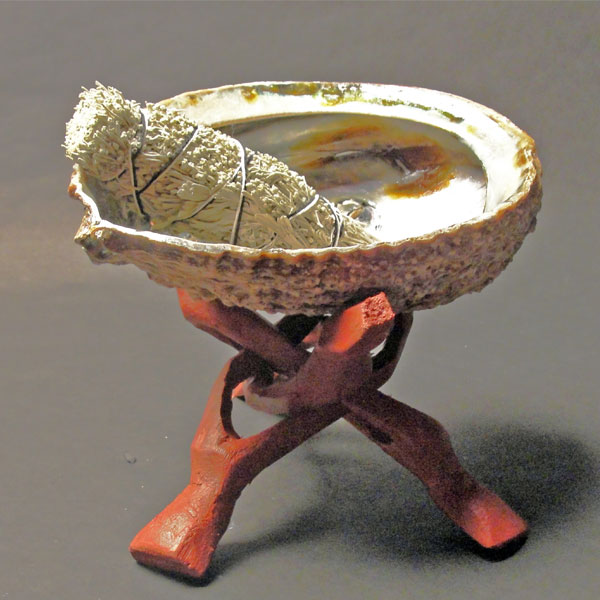
- Smudging bowls for sage and other botanicals
Many customers in New Hampshire, Vermont, Maine, Massachusetts, and the greater Northeast use abalone shells for smudging ceremonies, home décor, and craft projects.
Smudging With Abalone Shells
Abalone shells are widely used to hold burning sage, sweetgrass, or other botanicals during smudging. Their natural shape and heat‑resistant structure make them ideal for this purpose.
Learn more about smudging with our guide: White Sage Smudging Guide: Traditional Uses, Benefits & Tools
-
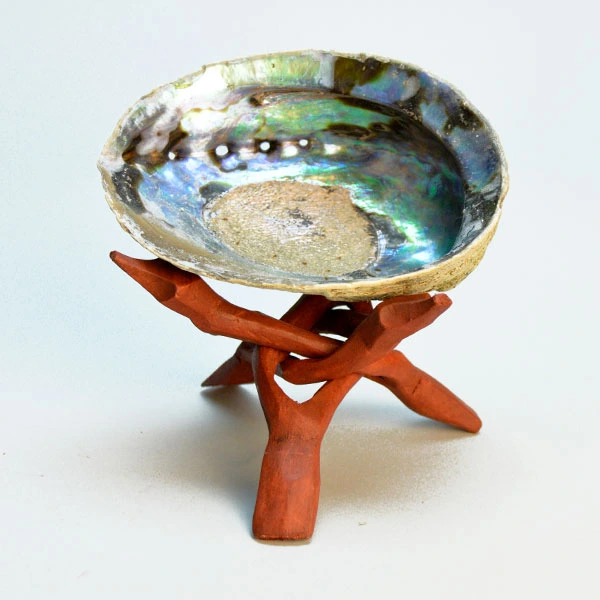
Abalone Shell with Wooden Stand
$12.95 Add to cart -
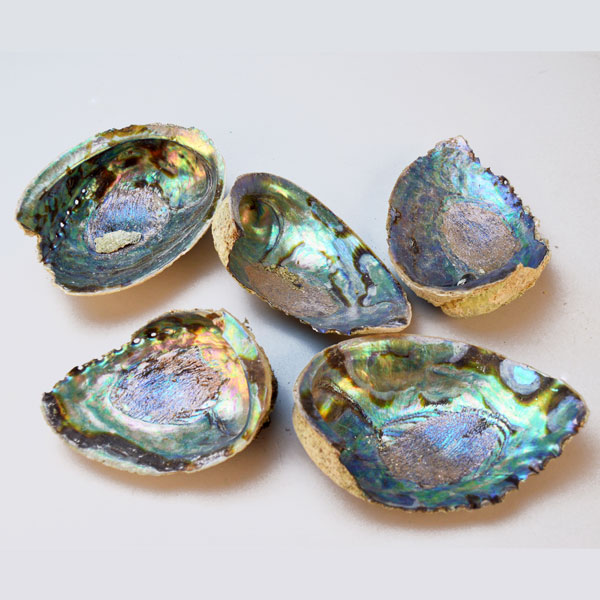
Abalone Shells & Scallop Shells Broken Pieces
$10.00 Select options This product has multiple variants. The options may be chosen on the product page -
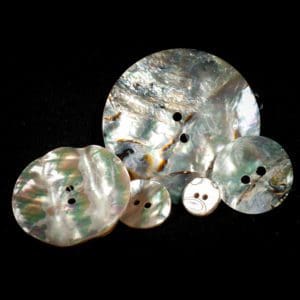
Abalone Shell Conchos
Price range: $1.75 through $12.25 Select options This product has multiple variants. The options may be chosen on the product page -
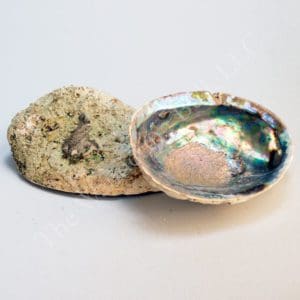
Abalone Shell
$9.95 Add to cart